Page 1 – Wolfgang Schoor For Mayor
Visit Page 2 – Transferable Skills by Clicking Here
Visit Page 3 – Research Project by Clicking Here
Visit Page 4 – Wolfgang Schoor As Mayor Compared To Other Candidates
Visit Page 5 – Why There Are No Yard Signs For Wolfgang Schoor As Mayor
Visit Page 6 – Under Construction
Contact me at: Wolfgang.Schoor.For.Mayor@gmail.com
Visit me at my home base on: 238 Villa St Unit #3 Ground Floor, Thunder Bay, Ontario, P7A 3Y2, Canada.
I will be available with prior appointment via email, from 4 PM to 6 PM during the week.
Table of Content
Click Here to Download Housing Research Project Document
Click Here to Download Presentation to the Housing Taskforce
Wolfgang Schoor for Mayor
“The Plan Man”: The Political Voice for All People of Thunder Bay
Vote for the Plan Man… and you will find better days ahead
I’m Wolfgang Schoor, and I’m offering my experience and education to become Mayor of Thunder Bay on a simple premise: real solutions. I have expended a lifetime actually building and fixing things, as a carpenter construction foreman, construction certified superintendent, occupational health and safety professional, clerk of the works, quality assurance and quality control professional, along with multiple troubleshooting for multi-million dollar projects in most provinces and territories of Canada. After more than 30 years of living in this city, raising my family here, and operating a licensed residential facility on Villa Street, I believe Thunder Bay doesn’t need another politician. It needs a planner, a builder, and a problem-solver at the helm.
Why I’m the Right Choice for Mayor!
Thunder Bay associated problems today as I see it are the following: housing shortages, crumbling infrastructure, lack of public safety, compounding drug addictions, and multiple other social issues. They call for someone who understands and has actually built things, managed people, balanced budgets, and lived alongside the populations the city is now struggling to serve. That’s exactly the résumé I bring, and it’s why I’m not asking anyone to just trust my promises. I’m asking them to look at what I’ve already built.
A track record inside the exact issues the city is facing
Villa House is the clearest proof of this. Since 1990, I have operated villa house, through three distinct chapters, each one a hands-on education in exactly the kind of housing and social challenges the city now faces. This self-funded villa house research project was to create an ergonomic social and physical living environment for people:
- 1990-1997: Villa House operated as a transition home for socially disadvantaged individuals and people who had offended against the law, with a mandate to provide supportive yet independent living, helping people rebuild stability on their own terms.
- 1997-2000: Villa House became an official Halfway House under contract with Correctional Service of Canada, housing federal parolees for six-month terms. I was directly responsible for supporting reintegrating client’s parolees into society while maintaining public safety under the Correctional Services Act, proof I can hold two competing priorities, compassion and public safety, in balance at the same time.
- 2000-Present: Villa House continues as a municipally licensed lodging house, now providing furnished residential housing to Canadian residents and international based people coming from six continents.
Few, if any, candidates for Mayor have thirty plus years of direct, personal, on-the-ground experience managing housing, tenant relationships, community reintegration, and public safety under one roof. I do!
Education that matches the breadth of the job
A mayor doesn’t just need to understand policy administrartion and construction. He/She needs to understand planning, history, human behaviour, and and be aware how the built environment shapes team building than assures the desired outcome; my intellectual academic background is shaped for exactly that: the building sciences and ergonomics from Waterloo, regional and environmental planning for winter cities from Guelph and Waterloo, as well as Canadian history, including Indigenous studies, from Lakehead University. That’s not a résumé built for laying bricks and driving nails. It’s a résumé built for leading a city into a stable environment, maintaining it, and only thereafter expand.
A builder’s discipline, not a bureaucrat’s process
My entire career has been governed by deadlines, budgets, safety codes, and measurable outcomes, not committee cycles. As “the Plan Man,” my pitch to Thunder Bay is straightforward: put someone in the mayor’s chair who is used to being held accountable for whether a project actually gets finished, on time and on budget, safely.
Background: My Education, Experience & Qualifications
I’m not a career bureaucrat, I’m a professional university graduate and master construction expert tradesman, at a level few candidates for public office can claim.
Trades & Field Experienced construction professional and specialist
- More than 45 years of combined practical and theoretical work in the building sciences and construction industry, including work as a Certified Construction Superintendent, Clerk of the Works, and Certified National Construction Safety Officer (NCSO). See The Gallery
- Certified Carpenter and Joiner in both Canada and Germany, having served formal apprenticeships in each country
- Decades of hands-on project experience across residential, industrial, commercial, and institutional (ICI) construction, agricultural building, construction camps, and surface mining projects across Canada and Germany. See The Gallery
- Quality Assurance/Quality Control, cost control, and on-time project delivery on multi-million dollar builds
University & College Education I pursued formal, academic knowledge, across a genuinely wide range of disciplines:
- University of Waterloo: a course in Applied and Domestic Ergonomics and the Building Sciences, akin a master graduate degree
- University of Guelph and University of Waterloo: a study preparing for a master’s degree in Regional and Environmental Planning for Livable Winter Cities in Canada
- Lakehead University: a study year toward a master’s degree in Canadian History and Material Culture, including Indigenous Studies
- Confederation College of Applied Arts and Technology: a Business Management Diploma, along with full and part-time study in Engineering/Architectural Design Technology spanning eight years
Product Developer & Problem-Solver I hold registered patents, industrial designs, and trademarks in both Canada and the United States, including life-safety systems, hand-tool systems, and engineered lumber and building systems. I solve problems from first principles rather than waiting for someone else to fix them.
Community Builder Since the late 1980s, I have owned and operated Villa House, a licensed lodging house on Villa Street that has served very different purposes when compared to conventional living arragements, over three decades. Details below.
My Platform
1. Affordable Housing & Homelessness
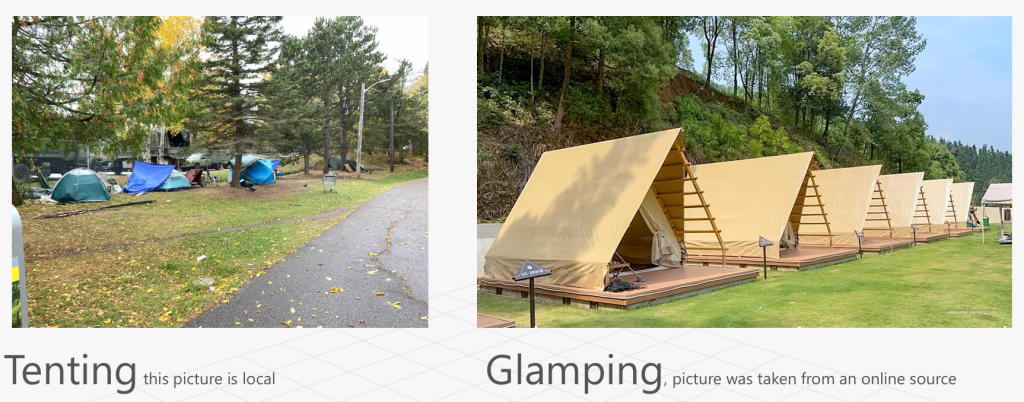
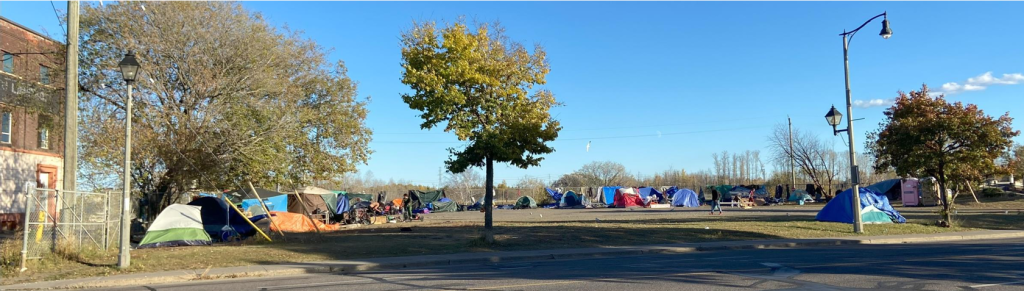
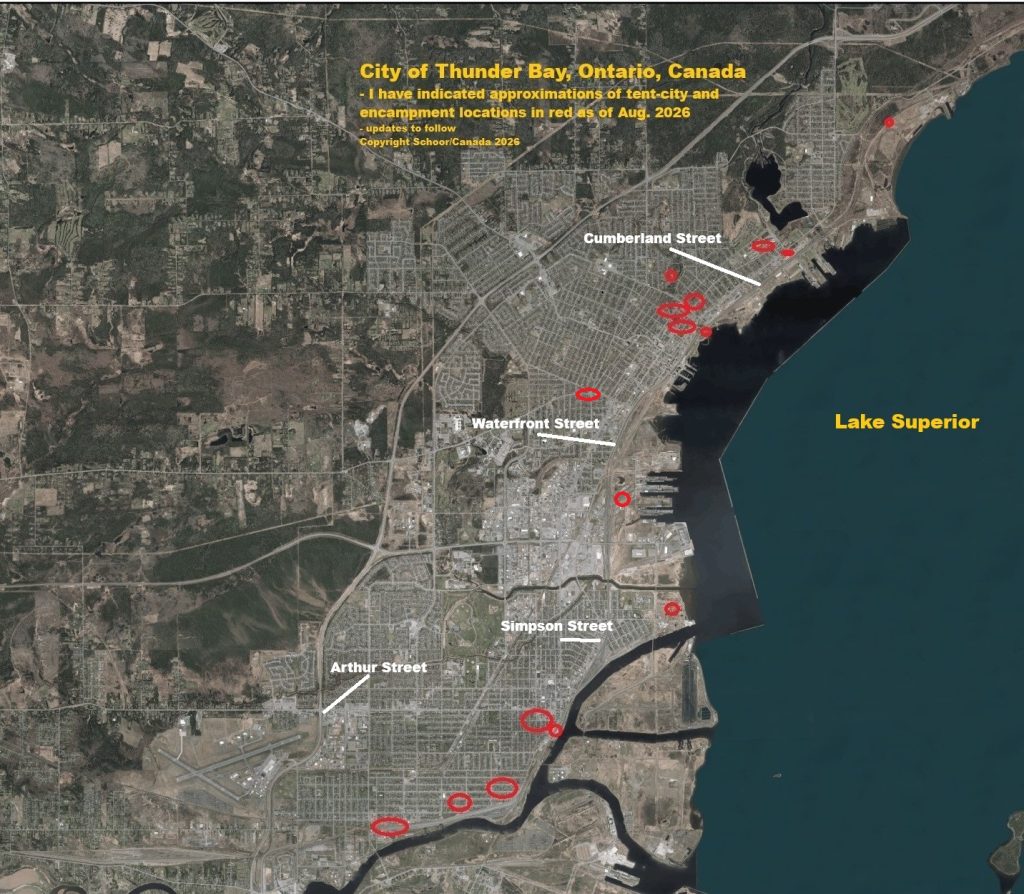
The problem: Homelessness has continued climbing through 2026. Encampments, or “tent cities,” have become a fixture in multiple locations around the city, limiting the dignity and opportunity of the people living in them, while at the same time restricting the public’s ability to enjoy green spaces and parks.
Why past approaches to housing shortages haven’t worked: A contributary factor on room shortages is that landlords are not willing to rent. About 3% of the city’s apartments and units currently sit unoccupied (CMHC, 2023), even as the shortage worsens. Meanwhile, of the 29 licensed lodging houses operating in the city 15 years ago, only around 10 remain today (Villa House among them), meaning an estimated several hundered general lodging rooms have been taken off the market entirely. Several forces are driving this: constantly changing regulatory and upkeep requirements shut down facilities, and some landlords who have simply opted out of renting because damage caused by destructive tenants routinely costs more than the rental income those units generate. Existing policy has not addressed either of these root causes.
My solutions:
- Tiny Home Clusters and pocket neighbourhoods. Small, affordable clusters of tiny homes, built around fostering close, supportive interaction among inhabitants rather than isolation, the same principle that has guided my own research into how living environments shape behaviour.
- Bringing non-rented units back into the market. Rather than leaving landlords and tenants to work at cross-purposes, I’m proposing a learning centre to educate both landlords and tenants on their rights and obligations, a voluntary program aimed at rebuilding the trust needed to bring lost lodging rooms and vacant apartment units back into service.
- Glamping as a short-term bridge. As an immediate, low-cost, and quickly deployable step up from raw tarp tenting, I support glamping-style shelter as a safer, more dignified short-term alternative while longer-term housing solutions are built out.
2. Infrastructure
The problem: I’ve watched years of: crumbling infrastructure, rising ownership costs, and high water rates that are hitting the average taxpayer hard, all while public trust in how the city delivers on its commitments has eroded, even though city workers do the best they can, based on top down instructions.
My approach: This is the area where my professional background translates most directly. I’ve spent 45+ years as a Certified Construction Superintendent and Quality Assurance/Quality Control advisor on multimillion-dollar institutional, commercial, and industrial projects, the same discipline of cost control, safety compliance, and meeting mandated timelines that has been missing from city infrastructure projects. I intend to bring hands-on construction management accountability.
3. Social Issues: Public Health, Public Safety & Addiction
The problem: Thunder Bay has slipped from being a vibrant, safe, and prosperous community into one with the implied third-highest crime rate in Canada on a per-capita basis. Public health and safety concerns, drug and alcohol-related harm, and behaviour in public spaces that falls outside long-standing community standards have left many residents feeling unsafe and unable to move freely around their own city.
My approach: My case here rests on direct experience rather than theory. For years, as operator of a halfway house under contract to Correctional Service of Canada, I was personally responsible for supporting the reintegration of federal parolees into the community while maintaining public safety under the Correctional Services Act, a balancing act that gave me a ground-level understanding of how supportive, well-managed living environments reduce risk, rather than simply displacing it. My self-funded research and experience have reinforced a consistent conclusion: people reflect the environments they live in. A harmonious, well-structured living environment tends to produce more stable behaviour in the community, while a chaotic or neglected one reflects that same instability outward. I intend to bring that same applied ergonomics-informed approach, real housing and social supports built around human behaviour, to the city’s public health and safety, and addiction challenges.
Get In Touch With Me
I’m not looking for financial support, but if you like a few brochures to hand out to family, friends, or neighbours, I love to hear from you. I will gladly provide them for you.
Wolfgang Schoor, BIS.CCS 238 Unit #3 Ground Floor Villa Street, Thunder Bay, Ontario, P7A 3Y2
Email: Wolfgang.Schoor.For.Mayor@gmail.com
Vote Wolfgang Schoor: Your Man, Your Plan, for Mayor.